 Recaptor
BiQU B1 3D Printer Review: A Solid Choice For Entry-Level FDM Printing
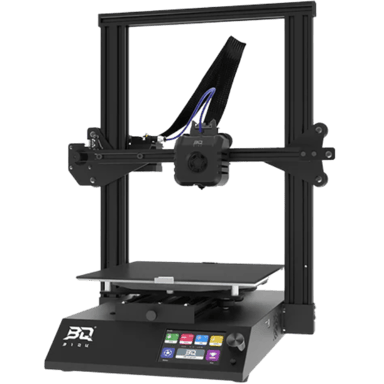
When stepping into the world of 3D printing, the BIQU B1 stands out as a notable entry-level option designed for beginners who want to explore consumer-grade prototyping and miniatures. Released in 2021, this FDM/FFF machine hinges on simplicity and upgradeability, built to bring accessible engineering and creative projects to life. Its key appeal lies in its balanced specs; starting with a competent build volume, respectable print speed, and user-friendly assembly, framing it as a practical choice in its price segment. But does the BIQU B1 truly deliver the value it promises on paper? Let's dive into the specifics to understand how its components come together to meet the needs of novice users and hobbyists alike.
Detailed Specs & Features
On paper, the BIQU B1 impresses with its 9.25-inch build width, depth, and an overall build height of 10.63 inches, crafting a build volume of 10368 cubic centimeters that is ample for a variety of small to medium prints. It operates within a stable environmental range, supporting temperatures from 50 to 86°F and humidity between 20%-80%, making it suitable for typical home or workshop conditions without demanding specialized climate controls. The internal power supply, rated for 200-240 volts with a power consumption capped at 270 watts, aligns well with standard household electrical setups.
In contrast, an idle power draw of just 10 watts suggests efficiency during downtime. The printer utilizes a FDM/FFF technology with a single extruder equipped with a 0.4 mm nozzle, but offers the flexibility of a 0.3 mm nozzle for finer detail. It supports the popular Nylon filament and other 1.75 mm diameter materials, including third-party options; a welcome feature that expands material choices beyond proprietary restrictions. The extruder's direct drive design and ability to reach up to 500°C mean it can handle specialty filaments that require elevated temperatures, positioning it well above entry-level thermal capabilities.
A standout on the hardware side is the 3.5-inch touchscreen interface with a 480x320p resolution, offering intuitive navigation through the menu and settings. The core XY motion system promises faster and more precise positioning than typical Cartesian setups. Furthermore, safety is thoughtfully addressed with multiple certifications, including CE, FCC, and RoHS, plus key features like overheat protection and automatic error shutdown. These bring a reassuring layer of reliability to daily use. Based on engineering data, the BIQU B1 comes with a one-year warranty and upgrade potential, a strong commitment in this category.
User Experience & Performance
Design & Build
In daily use, the BIQU B1's compact dimensions, roughly 17 inches squared for footprint and a height just under 19 inches, ensure it fits comfortably on most workbenches without demanding excessive space (width, depth, height). The magnetic, removable build plate with a textured surface facilitates adhesion and easy print removal; features that help beginners manage prints without frustration. While the open frame design simplifies accessibility, it also means environmental controls like heat retention are minimal. The manual bed leveling process, while a bit old-school, provides hands-on calibration that educates users but might feel cumbersome for some who prefer automation.
Performance
The BIQU B1's operational specs translate into practical printing performance: a max print speed of 100 mm/s with an effective, measured speed around 60 mm/s balances speed and precision well for its market segment. Users can expect to print a standard calibration benchmark (Benchy) in about 90 minutes, which is reasonable given its layer resolution ranging from 100 to 300 microns. The print accuracy rating of 100 points is consistent with dimensional fidelity. Additionally, its ability to recover from power loss preserves print jobs, a feature that adds resilience to unexpected interruptions. Noise levels stay moderate, around 50 dB during printing and 35 dB while idle; comfortable enough for home use without being overly distracting.
Connectivity & Software
Connectivity options are basic but functional, with print jobs transferred via SD card connectivity. While lacking remote monitoring or cloud integration, it supports popular slicing software like Simplify3D, making file preparation straightforward. Firmware updates are supported, ensuring users can keep the printer's software current, though the absence of mobile apps or API integrations limits the printer's ecosystem to local control.
Extra Features
Though not loaded with advanced extras, the BIQU B1 still offers key practical features like filament runout detection and power loss recovery. Lighting inside the chamber with RGB modes improves visibility during operation, which helps monitor prints without intrusive external lighting setups. Absence of a built-in camera or air filtration may be a downside for more demanding environments, but it aligns well with its beginner-focused positioning.
Pros & Cons
Pros
- Ample Build Volume Suitable for a Range of Projects
- High Max Extruder Temperature for Specialty Materials
- CoreXY Frame and Direct Drive Extruder for Better Accuracy
- User-Friendly Touchscreen Interface with Modern Resolution
- Support for Third-Party Filaments and Upgrade Path
Cons
- No Auto Bed Leveling Could Be Challenging for Some Beginners
- Lack of Network Connectivity and Remote Features
- Open Frame Design Limits Enclosure Benefits, such as Dust and Noise Reduction.
- No Built-In Camera or Air Filtration Systems
Price & Value For Money
Priced at $249 at BIQU Equipment, the BIQU B1 offers remarkable value. Given its one-year warranty and feature set, including a high max extruder temperature, solid build dimensions, and upgrade options, the price feels justified for those wanting a capable foundation without heavy investment. While it lacks some bells and whistles found on pricier models, it does deliver core features that beginners and hobbyists need to grow their skills. Those prioritizing remote control or automated bed leveling might consider investing more, but for basic educational, prototyping, and miniature model printing, the BIQU B1 strikes a competitive balance.
Quick Take
In short, the BIQU B1 packs a lot of fundamentals into an affordable package that caters well to newcomers. If we look at the numbers alone, its build volume, print speed, and supported filament versatility make it a solid starter printer that doesn't overwhelm with complexity but leaves room for growth. It's a printer meant to teach hands-on basics while still letting users tackle reasonably ambitious projects.
Closing Recommendation
The BIQU B1 may be ideal for beginners who want to learn and experiment with FDM printing without splurging on premium features. It appears to perform best for users willing to engage with manual calibration and a straightforward setup process. Overall, it helps users achieve quality prints affordably, with a clear upgrade path that adds future-proofing, which is important in a hobby where needs evolve.
Verdict
Rating: Based on the specifications and overall feature set, we believe BIQU B1 deserves 4.2 out of 5.
- Winner Feature => High extruder temperature and core XY motion system deliver quality and versatility beyond typical beginner printers.
- Needs Improvement => Missing auto bed leveling and network connectivity limit ease of use and modern workflow integration.
Reviews 0
The good, the bad, and the brutally honest.Average Rating


More 3D Printers 453
Unlock more awesome finds.